How a seasonal DTC brand hit 26x organic traffic and broke its winter ceiling
▲︎ 26x more organic traffic
The short version
- A seasonal DTC brand, unknown next to Amazon and the big industry names, with sales that died outside winter.
- Their pages were set up fine. What they lacked was authority, so we aimed almost everything at links to their category pages.
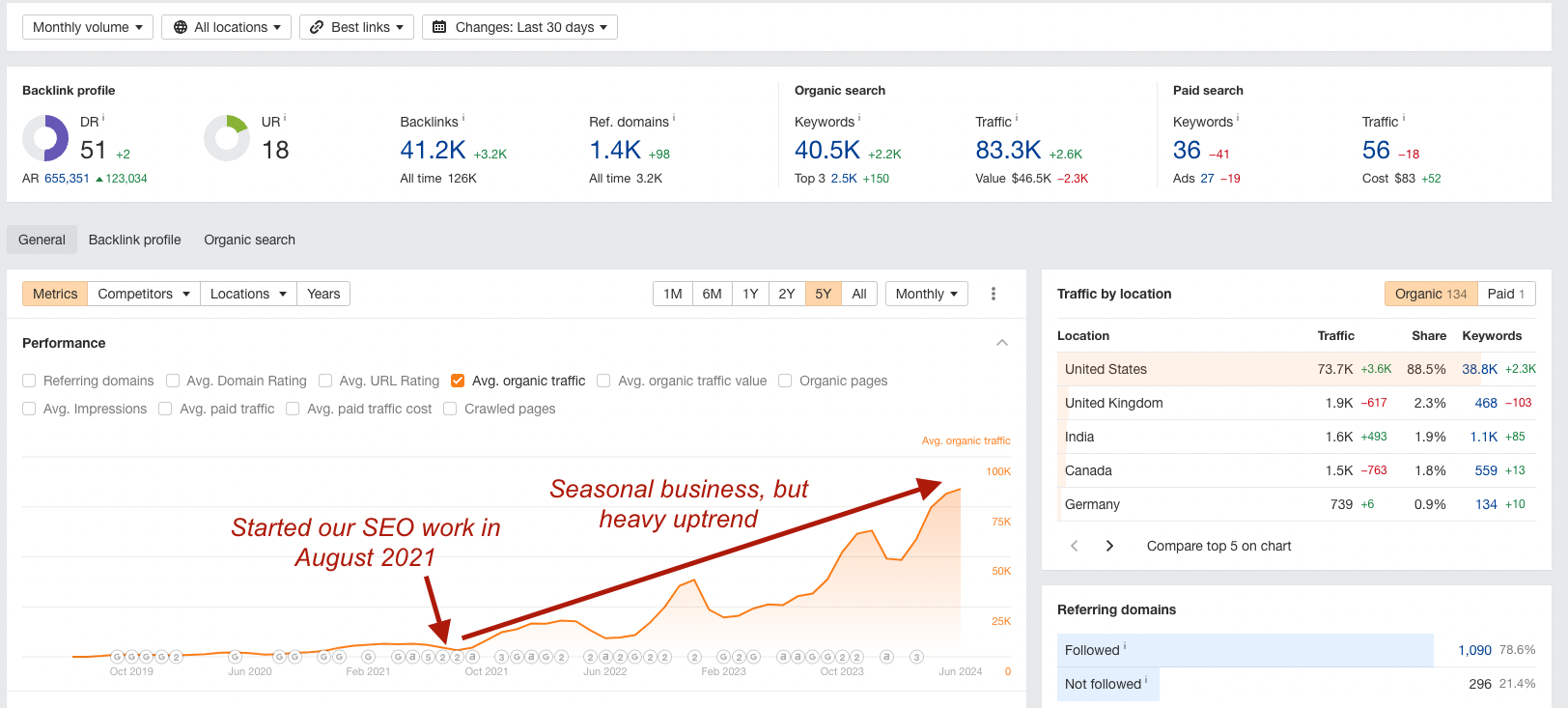
- The result: roughly 26x more organic traffic (from around 3,000 to over 83,000 a month), #1 rankings in the US for their biggest terms, and, for the first time, real traffic and sales in summer too.
The starting point
The client is under an NDA, so the specifics stay private, but the situation was clear. A DTC brand in a seasonal niche, with two problems. First, they were a small brand almost no one had heard of, up against Amazon and the well-known names in their industry. Second, their whole business lived in one season: traffic peaked every winter (December, January, February) and fell away for the rest of the year.
The diagnosis: they only needed authority
Everything we do starts with a strategy audit. We find the 80/20, and sometimes the 80/20 of the 80/20: the few steps that will actually move a client to the top of Google for the terms that matter. We look at where the client sits versus whoever is in position one, and exactly what they are missing to close the gap, across backlinks, content, on-page optimisation and internal links.
In their case the answer was simple. Their collection and product pages were set up well, the domain was fine, and the technical SEO was already in decent shape (a quick technical pass was about 1% of the work). They were missing one thing: authority. The big brands were beating them on backlinks, and nothing else.
What we did: authority, aimed at the money pages
So we put the budget where it would move the needle: roughly 85% into link building, 14% into content, and 1% into technical. Getting that split right is the whole game. Had we put 50% into content, 20% into technical and 30% into links, this campaign would have failed. It worked because the research came first.
The client was closely involved in the strategy. Together we decided to point links first at the category pages that were the low-hanging fruit, then compound toward the category pages with the highest search demand, some of them doing over 50,000 US searches a month. On the content side, we added FAQs and some copy to category pages, and built blog articles that raised topical authority and linked internally back to those category pages.
Breaking the seasonal ceiling
The most valuable part was not just more traffic, it was traffic in the right months. We helped rank their summer products, not only their winter ones. Their graph used to show a single tall peak each winter with flat months in between. It now has a summer peak too. For a business that used to make its year in a few winter weeks, that changes everything.
The results
Organic traffic went from around 3,000 to over 83,000 monthly visitors, roughly a 26x increase, and it is still climbing. We got them to number one in the United States for category terms doing 50,000+ searches a month, which moved the needle on both rankings and revenue.
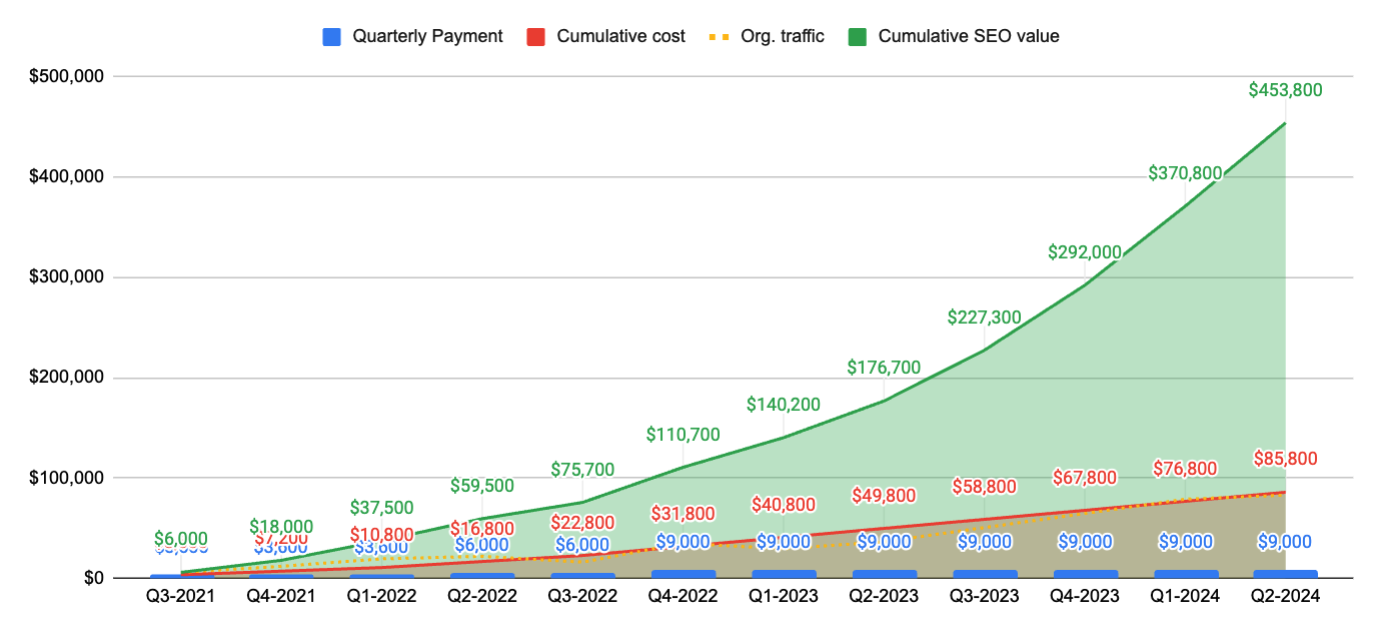
On the money side, they started at $1,200 a month and, as the growth came, chose to increase to $2,000 and then $3,000 a month. They were ROI-positive almost from the start, around the second month, where most campaigns take four to six. Across roughly $86,000 invested since August 2021, the campaign has produced an estimated $454,000 in tracked SEO value, and it keeps compounding.
Why it keeps paying off
This is the part paid ads cannot match. Turn ads off and the traffic stops that day. Stop SEO, and the rankings we built keep working: number-one positions tend to hold for at least six months, and top-three for a year or more. We are still working with this client today, and have since helped them expand into new markets. But even if they stopped tomorrow, the value we have built would keep returning for a long time.