How a brand-new SaaS beat the Goliaths for +1,652% organic traffic
▲︎ +1,652% organic visitors/mo
The short version
- An ecommerce SaaS came to us with a brand-new domain, up against competitors with years of authority behind them.
- The twist: they already had genuinely good content. What they were missing was authority, so nothing ranked.
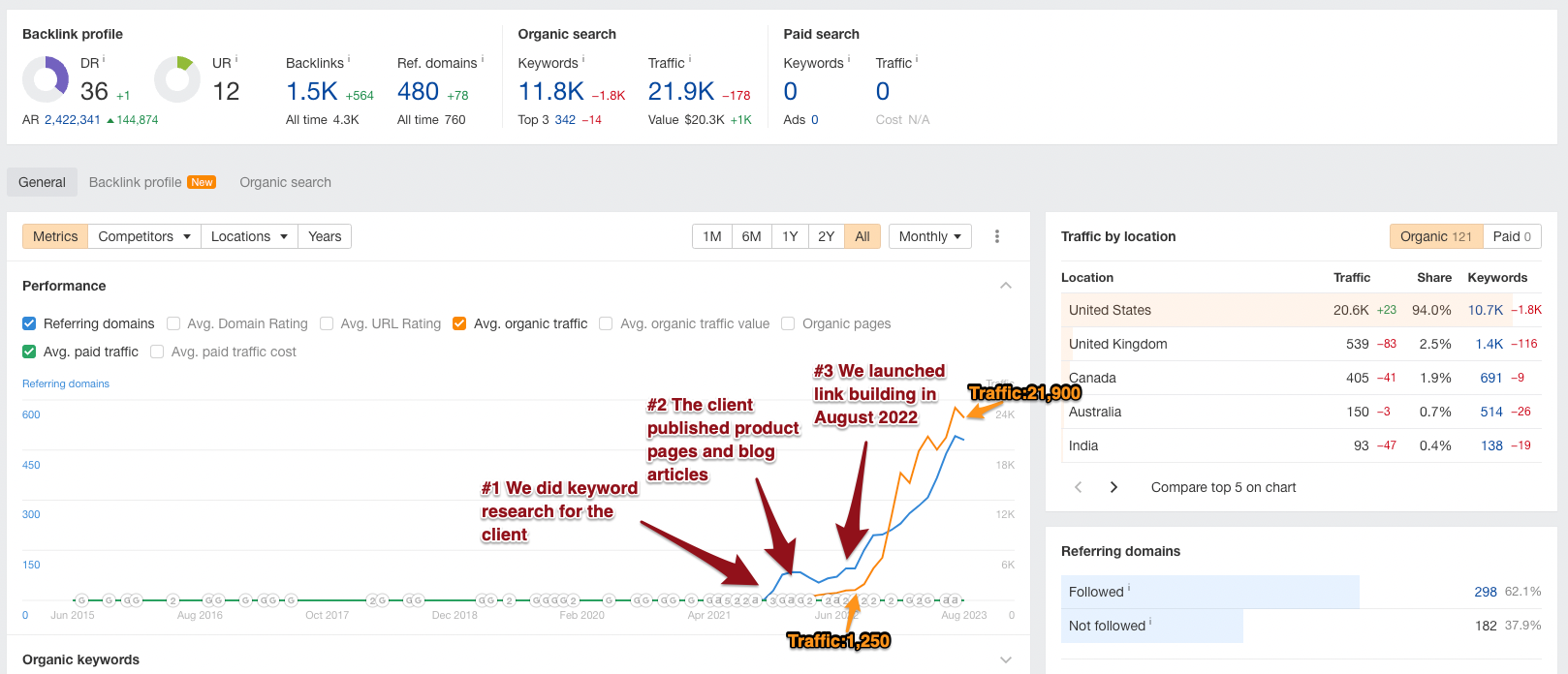
- We supplied that authority. Organic traffic went from 1,250 to 21,900 a month, and before long they were ranking number one for almost everything, so much so that they asked us to pause.
Who they were
An ecommerce SaaS company, selling software to online store owners. They launched in 2021 on a brand-new domain, with no authority yet, in a niche already dominated by high domain rating incumbents.
How it started: keyword research, in 2021
They first came to us in 2021, right as they were starting out. They didn’t want a full campaign yet, just content ideas. So we did the keyword research, and we did it properly, putting tens of hours into it. We split the targets into two groups: buyer-intent keywords for their product and service pages, and problem-aware keywords for blog content that would build topical authority and feed those money pages.
They took that research and wrote all the content themselves, with their own writers.
The problem: great content, no rankings
About a year later, they came back. All the content was live, product pages, service pages, dozens of articles, and none of it was ranking. It wasn’t doing anything for them. So they asked us a simple question: can you build links to these pages and get them to rank?
Our diagnosis: not a content problem, an authority problem
The content was genuinely well built, off the back of the 2021 keyword research. It didn’t need redoing. What it was missing was authority, and that is the single most common pattern we see: an ecommerce store with its product and collection pages set up correctly, sitting there not ranking, when the only thing missing is backlinks.
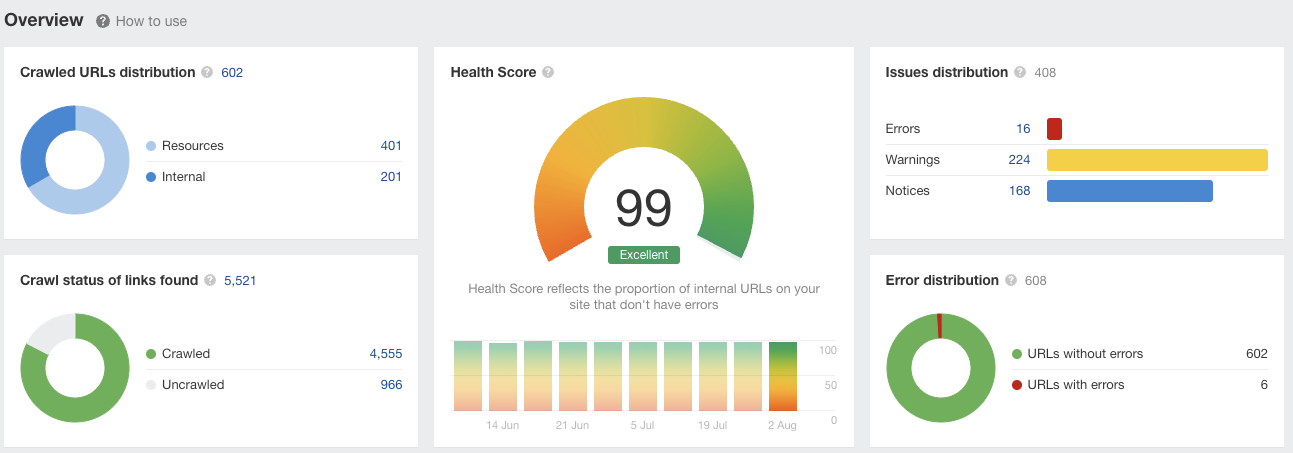
We also checked the technical side, for free, without charging or even mentioning it. The site scored a near-perfect 99 out of 100. Modern ecommerce platforms handle most of the technical heavy lifting, so there was nothing worth spending budget on there. We put effectively 0% of the campaign into technical fixes.
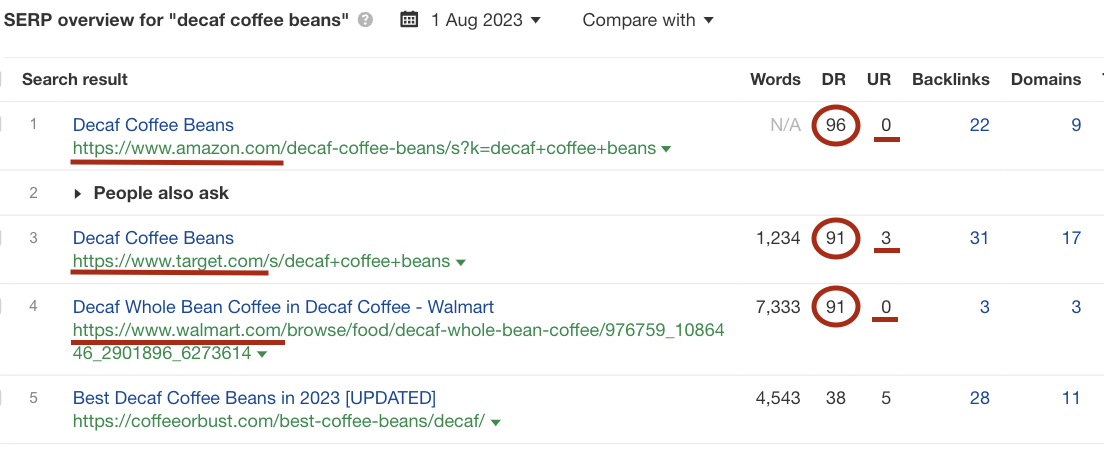
The opening for a brand-new site was in the competitors themselves. The big incumbents were ranking on overall domain authority, but their actual money pages had almost no links (URL Ratings of 0 to 3). They were beatable, as long as we pointed enough quality links at the right pages.
What we did: add fuel to the fire
First, a link gap analysis: for each page the client wanted to rank, we worked out exactly how many links it needed, based on what the competition already had. Then, from August 2022, we built links to those pages, month after month.
Because the content foundation was already strong, it worked almost immediately. We just kept compounding, building to different pages until each one ranked. Across the whole campaign, roughly 70% of the effort went into link building and 30% into content and on-page work. That is the 80/20 of SEO in practice: stay lean, and put the budget where it actually moves the needle instead of on details that don’t.
The results
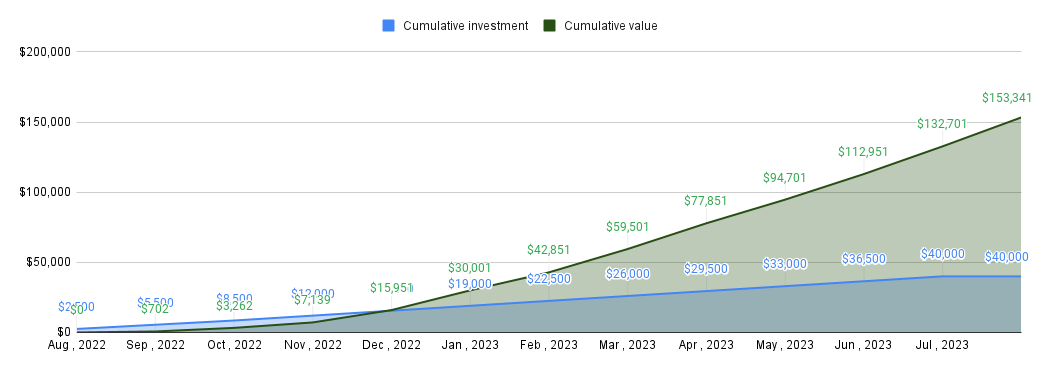
Organic traffic climbed from 1,250 to 21,900 monthly visitors. Over the first year, around $40,000 of investment returned an estimated $153,000 in tracked traffic value, and that is valuing each visitor conservatively at $1 when their product-page visitors are worth far more. The campaign was ROI-positive from the second quarter, and the value kept compounding well past that first year.
Before long, the client was ranking number one for almost everything they cared about, to the point where they asked us to pause the campaign. We were happy and a little sad at the same time: sad to see a client go, glad we had taken them as far as there was to go.
The best proof: they paused, then came back
Here is the part most agencies never show you. When the client stopped, the rankings and traffic we had built largely held, because good SEO keeps paying off long after you stop paying for it, unlike ads that vanish the moment you switch them off. But their competitors did not stop building links, and over time the client slipped on a few of those number-one positions and re-hired us.
Two lessons sit in that: SEO compounds and keeps returning value after the work stops, and holding the top spot takes far less effort than reaching it, though it is never quite zero.
What this means for your store
If your product and collection pages are built and simply are not ranking, you usually do not need a technical rebuild or more content. You need authority. Point quality links at your money pages, and a brand-new site can outrank far bigger competitors, and even Amazon, the way this one did.